

The weak demand for non-food items has reduced inflation in the Yaroslav region
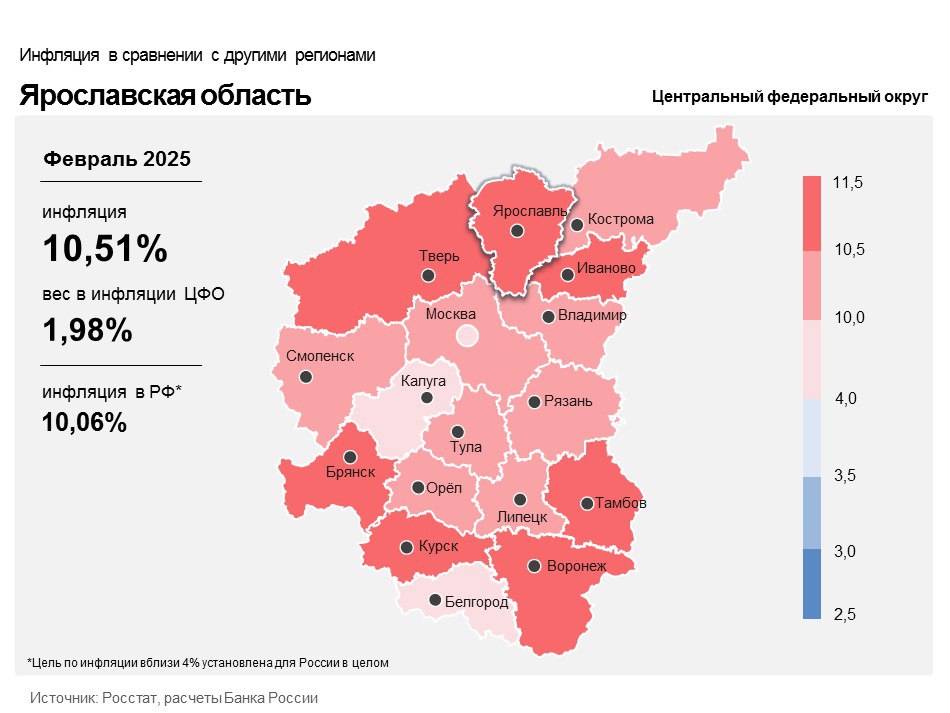
In February of this year, annual inflation in the region declined to 10.51% after the January 10.67%. In the Central Federal District, it also declined (up to 9.92%), but in general, it increased 10.06 per cent.
Owing to abnormally warm weather in February, the Jaroslavs were less likely to buy winter top clothing, so the price rise slowed.
In total, food prices in the region have not changed in a month. This was due to the strengthening of the rouble and increased imports of vegetables. For example, cabbage in February was less expensive than a month earlier. Prices of raw materials grew faster than in January, as milk harvests continued to face increased costs of production, packaging and logistics of goods, as well as labour shortages.
With regard to the cost of services, different factors also influenced them. For example, the strengthening of the rouble contributed to the lower cost of trips in selected foreign areas, while it had increased in January. However, the region ' s popularity in tourists affected the cost of guided tours: in February they cost more. As a result, the prices of services in the Jaroslava region have not changed much.
Annual inflation in the country is still significantly higher than the target of 4 per cent. This indicates that demand continues to outstrip the delivery of goods and services. It will take a long time to maintain high rates in the economy to reduce inflation to 4 per cent in 2026.
Price changes analysed in monthly information and analysismaterial The Bank of Russia.